From Scaffolding to Self-Improving Systems
History and recent paths of Recursive Self-Improvement (RSI): models improve Harness, not directly rewrite weights
THE QUESTION THIS PAGE ANSWERS
ANSWER FIRSTWhat is the key idea behind “From Scaffolding to Self-Improving Systems”?
History and recent paths of Recursive Self-Improvement (RSI): models improve Harness, not directly rewrite weights
Make the claim earn its place. Use this page as a decision aid, not a definition to memorize. Connect the idea to one real task, one observable result, and one failure that would change your mind.
Write one question you could answer with evidence after trying this idea.
A conclusion that sounds complete but leaves the key assumption untested.

She is a researcher I deeply respect, and her writing on AI safety and the Agent frontier has been required reading in this field for years. I highly recommend following her on X, and reading the original post once you finish this chapter.
Thinks and plans · Calls tools and takes actions · Perceives and manages context · Stores artifacts · Evaluates results
Successful AI products (e.g., Claude Code, Codex, Cursor) have proven: the Harness layer is as important as the raw model intelligence. A mediocre model with an excellent Harness often outperforms a stronger bare model.
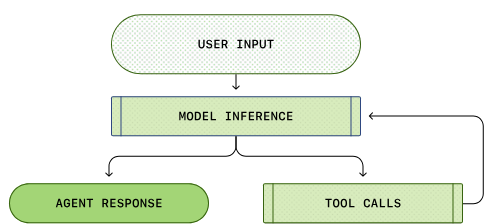
2. Harness engineering moves toward meta-methodology: the object of improvement shifts from answers themselves to the mechanism for getting better answers. Harness itself becomes the optimization target.
3. Mature Harness + intelligent model = positive feedback loop: better Harness breeds stronger models, and stronger models mean Harness doesn't need to be over-engineered.
Similarly, many Harness improvements will eventually be internalized as model behavior, but the interface with external context and tools will always remain.
How “A system that can use its current intelligence to improve the very mechanism that produces intelligence” becomes executable
“History and recent paths of Recursive Self-Improvement (RSI): models improve Harness, not directly rewrite weights” is not about a magic phrase. It is about giving the model enough information to know who the work is for, what must be done, and what counts as acceptable.
Background sets direction; constraints set the boundary
“History and recent paths of Recursive Self-Improvement (RSI): models improve Harness, not directly rewrite weights” shows why a useful request separates the task, audience, source material, output format, and constraints. Without background, the model guesses. Without acceptance criteria, fluent text is not evidence that the task is complete.
More words do not guarantee a better result
Turn “History and recent paths of Recursive Self-Improvement (RSI): models improve Harness, not directly rewrite weights” into a small experiment: change only one of background, requirements, or constraints while keeping the rest fixed, then observe which layer actually changes the output.
From “A system that can use its current intelligence to improve the very mechanism that produces intelligence” to “Evolution of RSI”
“A system that can use its current intelligence to improve the very mechanism that produces intelligence” grounds the problem in “I. J. Good (1965) defined the "ultra-intelligent machine": a machine that surpasses humans in all intellectual activities and can design better machines to improve itself. Yudkowsky (2008) formalized this as "R…”. “Evolution of RSI” then moves it toward “1965 · Good "Ultra-intelligent machine": a machine that can design better machines. Theoretical concept. 2008 · Yudkowsky Formally proposed "Recursive Self-Improvement": AI uses its own intelligence to improve…”. Together, they show that the lesson is not just a conclusion to remember, but a claim with conditions.
Carry the judgment into the next situation
Build a request layer by layer: task and audience first, material and output rules next, constraints and acceptance checks last. Change one layer at a time so you know what actually helped.
- “A system that can use its current intelligence to improve the very mechanism that produces intelligence”: I. J. Good (1965) defined the "ultra-intelligent machine": a machine that surpasses humans in all intellectual activities and can design better machines to improve itself. Yudkowsky (2008) formalized this as "R…
- “Evolution of RSI”: 1965 · Good "Ultra-intelligent machine": a machine that can design better machines. Theoretical concept. 2008 · Yudkowsky Formally proposed "Recursive Self-Improvement": AI uses its own intelligence to improve…
- “Why is Harness the Practical Path for Near-Term RSI”: Three-Step Prediction for Near-Term RSI 1. Models will not directly rewrite their own weights , but they can improve training pipelines and deployment systems, making the next generation stronger. 2. Harness en…
The final “Why is Harness the Practical Path for Near-Term RSI” brings the discussion to “Three-Step Prediction for Near-Term RSI 1. Models will not directly rewrite their own weights , but they can improve training pipelines and deployment systems, making the next generation stronger. 2. Harness en…”. The useful thing to carry forward is knowing which judgments must be revisited when input, scale, or risk changes.
I turned one judgment from this article into a small experiment I could run today. Knowing what to observe next is more useful than simply remembering the conclusion.
After reading this, I first looked for the conditions behind the idea instead of copying the method into a project. That order made the later trade-offs much clearer.
When this judgment reaches real work, which constraint should be added first? I am curious which step matters most between reading and the first practical attempt.
No discussion on this article yet.